If you’re running Meta ads and haven’t adjusted your strategy in the last six months, you’re already behind.
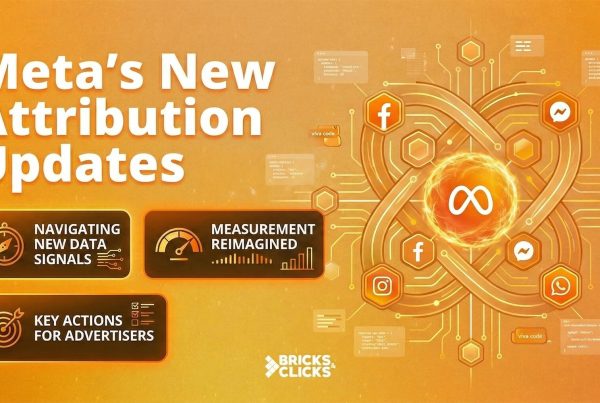
Meta has quietly rolled out Andromeda, a complete overhaul of how ads are delivered on Facebook and Instagram. This isn’t just another algorithm tweak or feature update—it’s a fundamental shift in how the platform connects businesses with customers.
What is Andromeda?
Think of Andromeda as Meta’s new matchmaking system for ads.
Previously, Meta’s system would look at your targeting parameters and show your ads to people who fit those criteria. It was like casting a fishing net in a specific area and hoping the right fish swam by.
Andromeda works differently. It’s the first stage of ad delivery—called “retrieval”—where Meta narrows down tens of millions of potential ads to a shortlist of a few thousand that might be shown to a specific user.
Meta uses a helpful analogy: imagine having a personal concierge who doesn’t just know you like shoes, but knows you prefer red flip-flops specifically for beach outings. That’s the level of personalization Andromeda enables.
The technical details involve new hardware and AI systems that process information 10,000 times faster than before. But what matters to you as a marketer is this: the system can now handle far more creative variations and make smarter, more personalized decisions about who sees what.
3 Big Changes You Need To Know
1. Targeting Is No Longer Your Job
For years, we obsessed over audience parameters. Age ranges, interests, behaviors, lookalike percentages—we treated these settings like precision instruments.
That era is over.
With Andromeda, Meta’s AI handles targeting automatically. Your detailed audience selections aren’t just less effective—they’re actually limiting the system’s ability to find your best customers.
The new approach: Broad targeting wins. Give Meta the room to learn and optimize. Your 35-54-year-old female audience interested in “wellness” and “organic food”? That’s probably costing you customers you didn’t even know existed.
2. Creative Has Become Your Targeting
Here’s the paradigm shift: your ads are now your audience selection tool.
Every headline, image, video hook, and value proposition sends signals to Andromeda about who should see that specific ad. The system studies which creative resonates with which users and routes it accordingly.
This means you’re no longer looking for the “winning ad” that beats all others. Different ads will win with different people. A testimonial video might crush it for one segment while a product demo performs better for another—and Andromeda figures this out automatically.
The strategic implication: Stop testing for “the winner.” Start building a diverse creative library that speaks to different customer types, pain points, and purchase motivations.
3. Simplicity Beats Complexity
The most successful campaigns under Andromeda look surprisingly simple:
- One campaign per objective
- One ad set (maybe two)
- Broad or open targeting
- Multiple diverse ads (10-20+)
Gone are the days of complex campaign structures with dozens of ad sets targeting micro-segments. That approach starves each ad set of data and prevents Meta’s AI from learning efficiently.
The modern structure consolidates budget and lets automation work. You spend less time managing campaign architecture and more time on what actually moves the needle: creative and conversion optimization.
Creative Diversification You Need To Know
Meta keeps emphasizing “creative diversification,” but what does that look like in practice?
It’s not about making five versions of the same ad with slightly different headlines. Real diversification means creating ads that differ in meaningful ways:
Different concepts and angles:
- Problem/solution approach
- Customer testimonials
- Product demonstrations
- Educational content
- Emotional storytelling
Different formats:
- Short-form video (under 15 seconds)
- Long-form explainer videos
- Static images
- Carousels
- User-generated content
Different personas and pain points:
- First-time buyers vs. repeat customers
- Budget-conscious vs. premium seekers
- Different use cases for your product
The goal is to give Andromeda options. When you provide diverse creative, the system can match the right message with the right person at the right moment. When you provide identical ads with minor tweaks, you’re just creating noise.
The Practical Game Plan
Simplify your campaign structure
- Consolidate fragmented campaigns
- Use one ad set with broad targeting
- Enable Advantage+ campaign features
Invest in creative production
- Aim for 3-4 unique ads per campaign (not variations—unique concepts)
- Test different hooks in the first 3 seconds
- Speak to different customer motivations
Change your testing mindset
- Stop looking for “the winner”
- Monitor which ads perform for which objectives
- Refresh creative every 1-2 weeks to prevent fatigue
- Focus on metrics that matter: ROAS, CAC, MER
Trust the system (but verify)
- Give campaigns time to learn (at least 7 days)
- Don’t panic over day-to-day fluctuations
- Make decisions based on statistical significance
- Remember: the algorithm is only as good as the creative you feed it
Conclusion
All of this leads to a simple truth: success under Andromeda demands both smarter strategy and richer creative—delivered at scale and guided by real insight.
This is where Bricks & Clicks Spark AI becomes a decisive advantage. Built to decode fast-moving audience behaviours and platform pattern changes, Spark AI turns complex data into clear, actionable ad strategies that help brands spend smarter and grow faster under systems like Andromeda. More importantly, it delivers a library of diverse, proven creative and messaging angles tailored to different audience mindsets, enabling teams to produce the volume and variety that Meta’s newer models reward. The result is a future-proofed approach to social advertising: sharper insights, stronger creative, and a continuous learning engine that keeps you ahead of every algorithm shift—not behind it.